



Attractions in Kraków and the surrounding area – what to see in the city and around Kraków
Krakow’s main attractions include the Main Market Square, Wawel and Kazimierz, and there is also plenty of natural beauty within the city itself: Zakrzówek, Skałki Twardowskiego, Wolski Forest and the Jagiellonian University Botanical Garden. In the vicinity of Kraków, it is worth planning a visit to the Wieliczka Salt Mine, Ojców National Park with Pieskowa Skała Castle, the Kraków Valleys, the ruins of Tenczyn Castle, Niepołomice Castle and the Auschwitz Memorial in Oświęcim.
Here’s a brief overview: what each place has to offer, how much time to set aside, and what to bear in mind before you set off.
Tourist attractions in Kraków – what to see in the city
Main Square
A square covering an area of approximately 4 hectares (roughly 200 by 200 metres), one of the largest medieval market squares in Europe. The Market Square is home to the Cloth Hall, St Mary’s Church with its altar by Veit Stoss, the Town Hall Tower (the Town Hall itself was demolished between 1817 and 1820) and St Adalbert’s Church. Beneath the Market Square, the ‘Market Square Underground’ tour – a branch of the Museum of Kraków featuring the remains of the medieval city – has been operating since 2010. A bugle call is played every hour from St Mary’s Tower.
Wawel Hill
The Royal Castle and Wawel Cathedral are separate institutions with separate admission tickets. At the castle, you’ll see, amongst other things, the tapestry rooms, the Crown Treasury and the Armoury. The cathedral houses the tombs of kings and national poets, the Renaissance Sigismund Chapel and the Sigismund Bell. It’s best to buy tickets for the castle exhibitions online, as they sell out quickly during the high season. Allow half a day to explore the whole hill.
Kazimierz
A former separate town, for centuries the centre of Jewish life in Kraków. Key attractions: Szeroka Street, the Old Synagogue (a branch of the Museum of Kraków), the Remuh Synagogue with its cemetery, Plac Nowy with the Okrąglak, the Church of Corpus Christi and the church at Skałka. Every summer, the Jewish Culture Festival takes place here. The area is at its liveliest in the afternoon and evening.
The Museum of Kraków
The former Historical Museum of the City of Kraków has over a dozen branches. The most popular are the Market Square Underground, Schindler’s Factory (an exhibition about Kraków during the occupation), the Eagle Pharmacy in Podgórze and the Krzysztofory Palace on the Market Square. It is worth booking tickets for Schindler’s Factory in advance.
The Benedictine Abbey in Tyniec
The abbey is situated within the boundaries of Kraków, on a limestone hill overlooking the Vistula (37 Benedyktyńska Street). Most likely founded in 1044, it is considered the oldest surviving monastery in Poland. You can visit the church and the abbey museum, and then take a stroll along the banks of the Vistula – from here, it’s a good idea to combine a visit to Tyniec with a walk through the Bielańsko-Tyniecki Landscape Park.
Natural attractions in Kraków
Within its city limits, Kraków boasts a landscape park, nature reserves, limestone cliffs and extensive forests. You can reach each of the following places in a few dozen minutes from the city centre.
Zakrzówek Park
A flooded former quarry with turquoise water and limestone walls. In 2023, the town opened a park here featuring tree-lined avenues, running tracks and a bathing area comprising five pools ranging in depth from 40 cm to 2 m, situated within the reservoir. The swimming area is open seasonally, and entry is restricted, so you should expect queues on hot days. Swimming in the reservoir is prohibited outside the designated swimming area.
Twardowski’s Rocks
The Dębniki City Park, covering approximately 34 hectares, forms part of the Kraków Municipal Forests and is situated on the same hill as Zakrzówek (Krzemionki Zakrzowskie). These are limestone rocks covered in woodland, with viewpoints overlooking the city. The name derives from the legend of Mr Twardowski, who is said to have had his studio here. Zakrzówek and Skałki can easily be combined into a single walk.
Wolski Forest
The largest forest complex in Kraków, situated to the west of the city. The forest is home to the Zoological Garden, Piłsudski’s Mound in Sowińcu (the highest of Kraków’s mounds) and a network of walking and cycling paths. A great place to spend half a day with the children.
The Bielańsko-Tyniecki Landscape Park and nature reserves
The park was established in 1981. It covers an area of approximately 64 km² and encompasses the western part of Kraków as well as the municipalities of Czernichów and Liszki. There are four nature reserves within its boundaries: Bielańskie Skałki, Panieńskie Skały, Skałki Przegorzalskie and Skołczanka. The park also includes Wolski Forest and the area around Tyniec, so you can visit Tyniec, Bielany (the Camaldolese monastery) and Wolski Forest all in one day.
The Jagiellonian University Botanical Garden
The oldest botanical garden in Poland, founded in 1783, is situated at 27 Kopernika Street, a few minutes’ walk from the Market Square. It covers an area of approximately 9.6 hectares and features a palm house and greenhouses. The garden is open seasonally – please check the opening hours on the Jagiellonian University website before your visit.
Mounds and viewing points
The best views of the city are from the Kościuszko Mound (Salwator), the Krakus Mound (Podgórze), the Piłsudski Mound (Las Wolski) and the edges of Zakrzówek. Krakus Mound is accessible without a ticket, whilst entry to Kościuszko Mound requires a ticket.
Attractions near Kraków
Most places near Kraków are easier to visit by car than by public transport, especially if you want to visit two places in a single day (e.g. Ojców and Pieskowa Skała, or Tenczyn and the Kraków Valleys).
Wieliczka Salt Mine
A mine just beyond Kraków’s south-eastern boundary, listed by UNESCO since 1978. The tourist route is approximately 3 km long and leads through chambers at depths ranging from 64 to 135 metres. To start with, you descend around 800 steps. The most famous attraction is St Kinga’s Chapel – 54 metres long, 101 metres underground, with chandeliers made of salt crystals. The temperature underground remains a constant 14–16°C, so be sure to take a jacket with you, even in summer. Tours are guided, and it’s worth buying tickets online.
Ojcowski National Park and Pieskowa Skała Castle
The smallest national park in Poland (21.46 km², established in 1956), about 16 km north of Kraków, in the Prądnik Valley. Main attractions: the Kraków Gate (a rock formation overlooking the road), the ‘Na Wodzie’ chapel in Ojców, the ruins of Ojców Castle, Łokietek’s Cave and Ciemna Cave. At the northern end of the park stands Hercules’ Club and the Renaissance castle of Pieskowa Skała – a branch of the Royal Castle at Wawel, featuring a museum of interiors and a garden. Allow one day to explore the whole park.
The Krakow Valleys
A series of narrow, rocky valleys to the north-west of Kraków, protected within the Kraków Valleys Landscape Park. The most popular are the Kobylańska Valley and the Będkowska Valley – featuring limestone cliffs, walking trails and rock-climbing spots. It’s a good option for a half-day walk, and at weekends the car parks at the entrances to the valleys fill up quickly.
Tenczyn Castle in Rudno
The ruins of a castle some 24 km west of Kraków (Krzeszowice municipality), not far from the A4 motorway. Construction of the stone castle began in 1331; it stands at the highest point of the Tenczyński Ridge and forms part of the Eagles’ Nests Trail. The ruins were reopened to visitors in 2016 – please check the opening hours before you set off.
The Royal Castle in Niepolomice
The castle, built on the initiative of Casimir the Great in the mid-14th century, is known as the ‘second Wawel’. Since 2001, it has housed the Niepołomice Museum, featuring exhibitions on painting, hunting and the town’s history. The Niepołomice Forest, with its cycle paths, begins right next to it, so it is easy to combine a visit to the museum with a walk.
Auschwitz-Birkenau Memorial and Museum
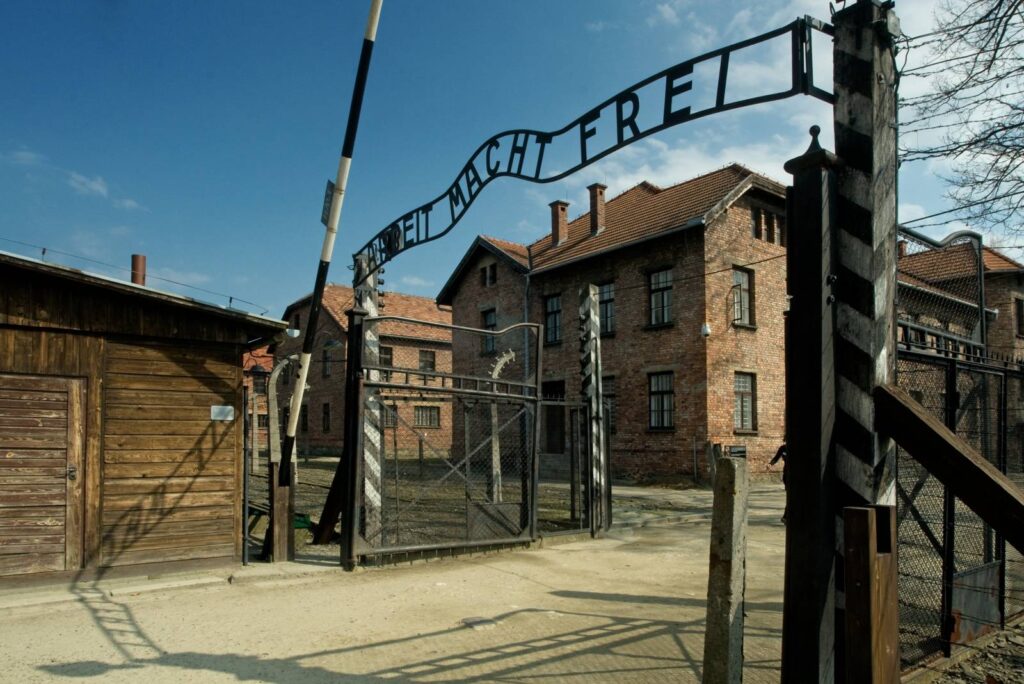
The former German Nazi concentration and extermination camp in Oświęcim. Admission to the Memorial Site is free, but you will need a personalised admission card, which can only be booked online at visit.auschwitz.org – There are no shops on site. The guided tour lasts around 3.5 hours (Auschwitz I and Birkenau). The main car park and entrance are at 55 Więźniów Oświęcimia Street. Please arrive at least 30 minutes early, as there is a security check, and rucksacks and bags must not exceed 35x25x15 cm.
What to see in Kraków and the surrounding area – a sample itinerary
| Day | Plan | What to watch out for |
|---|---|---|
| 1 | Main Market Square, Market Square Underground, Wawel, Kazimierz in the evening | Buy tickets for Wawel and the Underground online |
| 2 | Zakrzówek and Skałki Twardowskiego, Tyniec, Wolski Forest or Kościuszko Mound | The swimming area at Zakrzówek is open only during the season, with a limit on the number of visitors |
| 3 | Ojcowski National Park and Pieskowa Skała | At weekends, make sure you arrive at the car park early |
| 4 | The Wieliczka and Niepołomice Salt Mines | mine jacket, online tickets |
| 5 | Auschwitz-Birkenau in Oświęcim | Admission tickets are available online only; please arrive 30 minutes early |
Getting there and parking
The centre of Kraków is part of a paid parking zone, and car traffic is restricted within the Old Town itself. When visiting the city centre, it’s best to leave your car at a Park&Ride car park or outside the zone and travel by tram. We’ve described where to park for free in our article on free car parks in Kraków. There are car parks at the attractions just outside the city (Wieliczka, Ojców, Tenczyn, Oświęcim), most of which are pay-and-display.
If you’re flying into Kraków or don’t have your own car, you can hire a car from Slawa Rent in Wadowice – the office is at 1 Błonie Street, and we’ll arrange for the car to be delivered to Kraków or Balice Airport when you make your booking. You’ll find further details on the website car hire companies in Kraków, and prices in price list.
Frequently Asked Questions
What’s worth seeing in Kraków in a single day?
The Main Market Square with St Mary’s Church and the Cloth Hall, Wawel and Kazimierz. These three places are close to one another and can be explored on foot.
What are the natural attractions in Kraków?
Zakrzówek Park, with a swimming area in a former quarry; Twardowski’s Rocks; Wolski Forest, with its zoo and Piłsudski’s Mound; the Bielańsko-Tyniecki Landscape Park, with four nature reserves; and the Jagiellonian University Botanical Garden.
What is there to see around Kraków?
The Wieliczka Salt Mine, Ojców National Park with Pieskowa Skała Castle, the Krakow Valleys, the ruins of Tenczyn Castle, Niepołomice Castle and the Auschwitz-Birkenau Memorial Site in Oświęcim.
Do you need to book a visit to the Auschwitz Museum?
Yes. Admission is free, but you must book a personalised admission ticket online at visit.auschwitz.org – tickets are not sold at the entrance.
How long does it take to visit the Wieliczka Salt Mine?
The tourist route is about 3 km long and involves walking down around 800 steps. Including the journey there and waiting to enter, you should set aside half a day for Wieliczka.