


How do you jump-start a car? A step-by-step guide to connecting the cables
To jump-start a car, position a vehicle with a working 12 V battery next to it, switch off all electrical appliances in both cars, and connect the cables in the following order: the red cable to the positive terminal of the flat battery, the other end of the red cable to the positive terminal of the working battery, the black cable to the negative terminal of the working battery, and the other end of the black cable to an unpainted metal part of the engine in the car with the flat battery, away from the battery itself. Then start the donor car, wait a few minutes and try to start the other car.
What do you need for jump-starting?
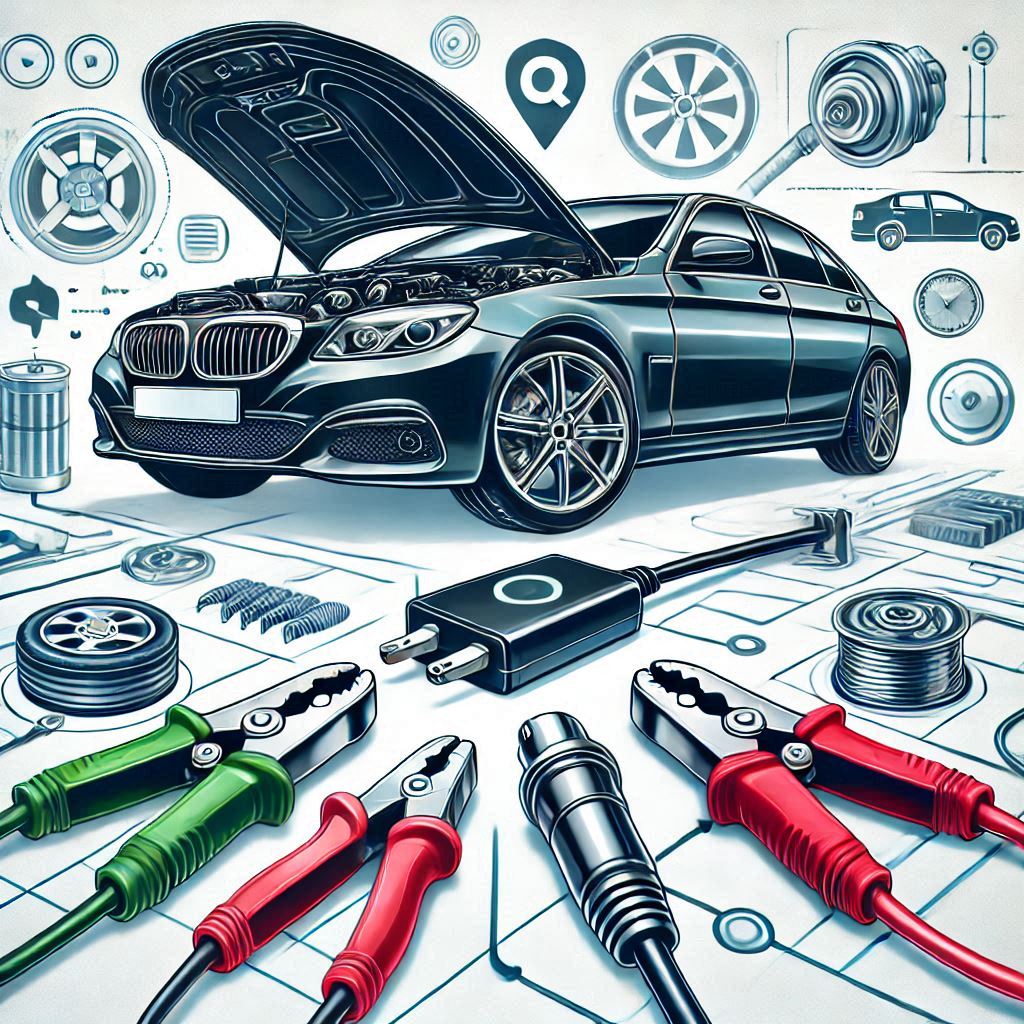
- jumper cables (red to positive, black to negative and earth),
- a second car with a working battery of the same voltage – in passenger cars this is 12 V,
- gloves and, ideally, safety goggles,
- car manual – in many newer models, the manufacturer specifies separate connection points for the cables under the bonnet.
Do not attempt to start the engine if the battery is frozen, cracked or leaking electrolyte. The battery emits hydrogen, so there must be no sparks or open flames near it.
How to jump-start a car, step by step
1. Preparation
- Position the cars so that the cables reach, but the cars do not touch.
- Switch off the engine in the donor car and apply the handbrakes in both cars.
- Switch off the lights, the radio, the ventilation, the windscreen heating and any other electrical appliances in both cars.
- Check that the terminals are clean. Remove any thick layer of build-up, as it impairs contact.
2. Order in which to connect the cables
| Step | Cable | Where to connect |
|---|---|---|
| 1 | red | the positive (+) terminal of a flat battery |
| 2 | red, the other end | the positive (+) terminal of a working battery |
| 3 | black | the negative (-) terminal of a working battery |
| 4 | black, the other end | the unpainted metal part of the engine or a ground point in the car you’re starting – away from the battery |
Connect the last terminal to earth, not to the negative terminal of a flat battery, as a spark may occur when connecting it. It is better for any spark to occur away from the battery. Never connect the positive and negative terminals together.
3. Starting the engine
- Start the engine in the donor car and leave it running for a few minutes to recharge the flat battery.
- Try starting the other car. In a car with a manual gearbox, press the clutch.
- If the engine won’t start, don’t turn the starter for more than a few seconds. Wait a moment and try again.
4. Disconnecting cables
Whilst the engine is running, disconnect the cables in reverse order: first the black cable from the chassis of the car you’ve started, then the black cable from the negative terminal of the donor battery, followed by the red cable from the positive terminal of the donor battery, and finally the red cable from the positive terminal of the battery in the car you’ve started. Take care to ensure that the clamps do not touch each other or the car body.
After starting
Don’t switch off the engine straight away. A short drive around town may not be enough for the alternator to recharge a heavily discharged battery. If the problem recurs after a night’s rest, have the battery checked at a garage or recharge it using a battery charger.
Diesel for cables – what to bear in mind
A diesel engine requires more current to start than a petrol engine, particularly in cold weather. Use thicker cables, and before attempting to start the engine, turn the key to the ‘ignition’ position and wait until the glow plug indicator light goes out. The donor vehicle should have a battery with a similar or greater capacity.
How to start a car by pushing it
You can only push-start a car with a manual gearbox. You can’t start a car with an automatic gearbox this way.
- Turn the ignition on (with the key in the ‘on’ position).
- Press the clutch and change into second gear.
- Let the assistants get the car up to speed, preferably on a flat, clear stretch of road.
- When the car is moving at a brisk walking pace or slightly faster, release the clutch quickly.
- Once the engine has started, press the clutch and keep the revs up with the throttle.
This method is less effective when the battery is very low, as the electronics and fuel system also need power. In newer cars, it is safer to use jumper cables or a jump-start device.
A starter kit instead of a second car
A portable jump-start device (known as a ‘booster’, i.e. a power bank with clamps) allows you to start your car without needing another vehicle. When choosing one, check that the starting current specified by the manufacturer is suitable for your engine capacity, particularly for diesel engines. The device must be kept fully charged – a flat one won’t help. Connect the leads in the order specified in the device’s instructions.
Why won’t the car start even with jumper cables?
- Poor contact – terminals on dirty clamps or cables that are too thin.
- Battery to be replaced – if the starter motor turns slowly even when jump-started, the battery may not be holding its charge.
- Starter motor – A single click or no response when the battery is fully charged may indicate a fault with the starter motor.
- Alternator – The car starts when jump-started, but cuts out after a while or won’t start the next day.
- Fuel, ignition, glow plugs – The starter motor turns over as normal, but the engine won’t start.
In that case, don’t strain the starter motor and battery with further attempts. Call a mechanic or roadside assistance covered by your insurance policy, if you have one.
Jump-starting a hire car
If the battery in your hire car fails, call the hire company first. You can contact Slawa Rent on 787 001 003. You can find their range of cars on their website Slawa Rent’s fleet.
Frequently Asked Questions
What is the correct order for connecting the jumper cables?
Red: positive terminal of the flat battery, then positive terminal of the working battery. Black: negative terminal of the working battery, then a metal part (earth) of the engine in the car you’re starting. Disconnect in the reverse order.
How long should you wait before jump-starting a car?
Once you’ve started the donor car, wait a few minutes to allow the flat battery to recharge a little. Then try starting the engine in short bursts, with breaks in between.
Is it possible to jump-start a diesel engine?
Yes. Use thicker cables and a donor battery with a similar or higher capacity, and wait until the glow plug indicator light goes out.
Will a car with an automatic gearbox start when pushed?
No. That leaves jumper cables, a jump-start device or a breakdown service.
Can you connect the black cable to the negative terminal of a flat battery?
Manufacturers recommend connecting it to the engine earth away from the battery, as any spark that might occur will then be away from the battery gases.