




Thermostat replacement - when is it necessary and how much does it cost?
Thermostat replacement - when is it necessary and how much does it cost?
The thermostat is a small, but extremely important component of the engine cooling system. Its job is to regulate the operating temperature of the drive unit, which has a direct impact on combustion efficiency, fuel consumption and engine life. A faulty thermostat can lead to serious breakdowns and costly repairs. In this article, you will learn how to recognise malfunctions, when to replace the thermostat and how much it costs.
What is a thermostat and how does it work?
A thermostat is a thermostatic valve located in the engine cooling system that controls the flow of coolant between the engine and radiator. Its design is based on a temperature-sensitive element - usually a wax or liquid that expands when exposed to heat.
How does the thermostat work in practice?
When the engine is cold (after starting) the thermostat is closed. The coolant circulates only inside the engine in a small circuit, allowing the optimum operating temperature (usually 80-95°C) to be reached quickly. This reduces warm-up time, fuel consumption and exhaust emissions.
Once the operating temperature is reached The thermostat opens gradually, allowing fluid into the radiator where it is cooled by the airflow. As the temperature drops, the thermostat closes, restricting the flow. In this way, it maintains a constant optimum engine temperature.
Modern electronic thermostats (with control map) are even more precise - adjusting the engine operating temperature according to load, driving conditions and outside temperature.
Symptoms of a defective thermostat
A faulty thermostat manifests itself with characteristic symptoms that are worth knowing.
Thermostat locked in the closed position
Main symptom: Rapid engine overheating. The temperature gauge on the dashboard quickly enters the red field, the warning light may come on. Radiator fan runs intensively or does not switch off.
Consequences: This is the most dangerous situation! Overheating of the engine can damage the head gasket, lead to head deformation or total seizure of the engine. Stop the vehicle immediately and call for help!
Thermostat locked in open position
Main symptom: The engine takes a very long time to warm up or does not reach operating temperature at all. The temperature gauge remains low even after a long drive. The heater (cabin heating) works poorly or does not heat at all.
Consequences: Increased fuel consumption (by up to 10-20%), higher emissions, faster oil consumption, poorer engine performance. Prolonged driving with an underheated engine reduces engine life.
Unstable engine temperature
Main symptom: The temperature gauge jumps chaotically - once it indicates a normal value, then it drops or rises rapidly. This may be accompanied by rough running of the engine.
Consequences: Indicates a partially blocked or worn component. Requires prompt replacement before it leads to overheating.
Coolant leakage
Main symptom: Stains under the car, falling fluid level in the expansion tank, characteristic sweetish smell.
Consequences: Thermostat seals can wear out, causing leaks. Low fluid levels lead to overheating.
When to replace the thermostat?
Preventive exchange
Manufacturers recommend replacing the thermostat every 80-120,000 kilometres or what 5-7 yearsdepending on the type of vehicle. The thermostat contains rubber and plastic components which, over time, age, lose elasticity and cease to function properly.
Repair replacement
Immediate replacement is necessary when:
- The symptoms of malfunction described earlier will appear
- Engine overheats or does not reach operating temperature
- Coolant replacement or cooling system repair is carried out
- Computer diagnostics indicates faults related to the cooling system
For other repairs
The thermostat is often replaced on the occasion of other work to save on labour:
- Replacing the water pump
- Replacing the valve train (if the thermostat is close to the belt)
- Head gasket repair
- Replacement of cooling system hoses
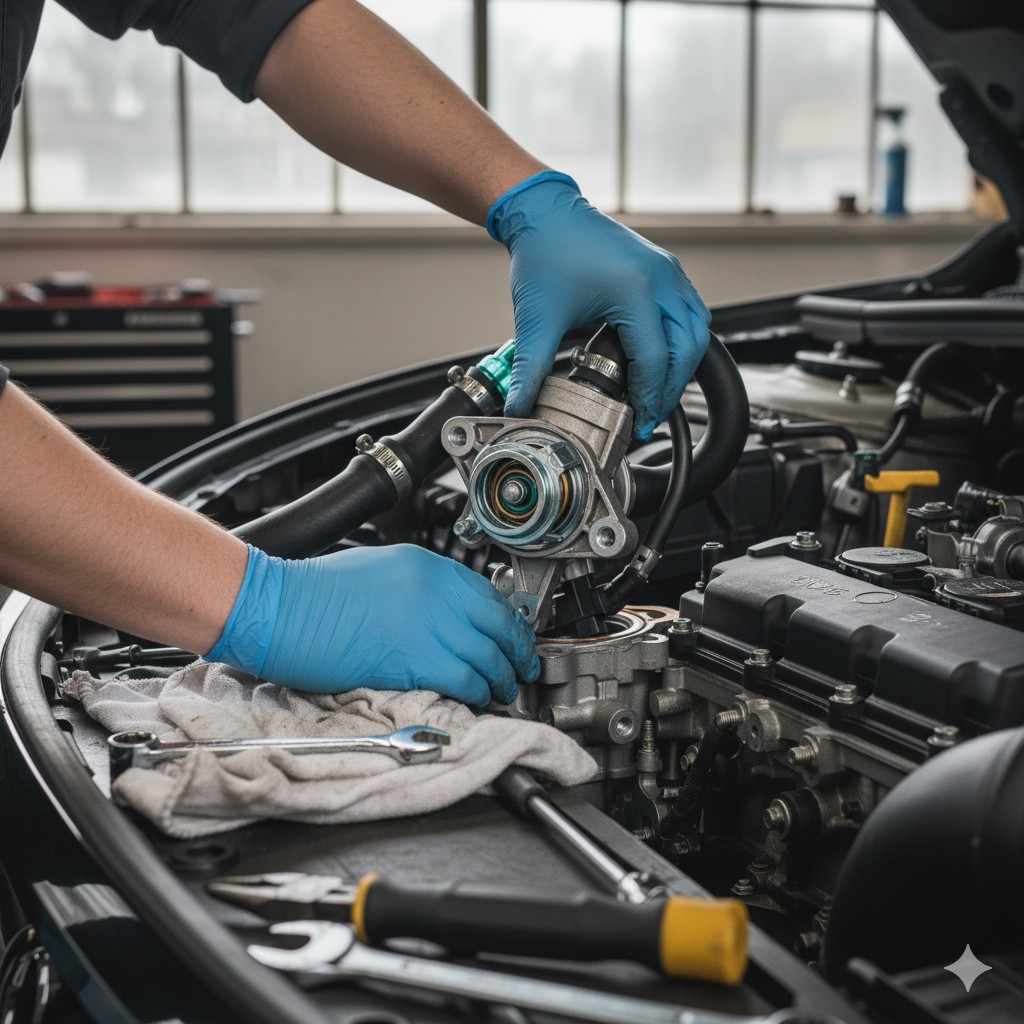
Step-by-step thermostat replacement process
Replacing the thermostat is a relatively straightforward operation on most cars, although access may be difficult on some models.
Step 1: Preparation
The mechanic waits until the engine has cooled down (hot coolant can burn!), prepares a new thermostat with gasket, tools and new coolant.
Step 2: Drain the fluid
Fluid is drained from the cooling system - partially or completely, depending on the location of the thermostat.
Step 3: Removal of the old thermostat
The thermostat housing is unscrewed (usually a few screws), the old thermostat is removed together with the old gasket. The surfaces are cleaned of the remains of the old gasket.
Step 4: Fitting a new thermostat
The new thermostat is fitted in the correct position (important - it often has a specific mounting direction!). A new gasket or sealant is applied (depending on the type). The housing is screwed on to the correct tightening torque.
Step 5: Refill
The system is topped up with fresh coolant of the correct specification. The mechanic vents the system (removes air bubbles).
Step 6: Test
The engine is started and checked to ensure that it is leaking, that the thermostat is working properly and that it is reaching the correct temperature. Hoses and connections are also checked.
How much does it cost to replace a thermostat?
The cost of replacing the thermostat consists of the price of parts and labour.
Thermostat price
Standard mechanical thermostats:
- Popular cars (e.g. Skoda, VW, Opel) - PLN 80-200
- Mid-range cars (e.g. Ford, Peugeot) - £150-350
- Premium cars (e.g. BMW, Mercedes, Audi) - £300-800
Electronic thermostats (with map):
- 400-1500 depending on the brand
Labour costs
Replacement time is usually 0.5-2 hoursdepending on the availability of the thermostat for the model in question:
- Easy access - £150-300
- Difficult access - £300-600
- Very difficult to access (requires disassembly of other components) - £600-1000
Additional costs
- Coolant (2-5 litres) - PLN 50-150
- Gaskets, hoses (if required) - £50-200
- Computer diagnostics - PLN 50-100
Total cost of replacement
Popular cars: PLN 300-700 Mid-range cars: PLN 500-1000 Premium cars: PLN 800-2500
Is it worth replacing the thermostat yourself?
If you have basic mechanical knowledge and the right tools, replacing the thermostat is possible on your own. Pros: Saving on labour (£150-600). Disadvantages: Risk of errors (incorrect installation, leaks, incorrect venting), no guarantee, need for tools and space to work.
For the majority of motorists, we recommend having the replacement carried out by a professional workshopespecially in newer cars with electronic thermostats, which often require computer adaptation.
How to avoid thermostat problems?
Check the coolant level regularly
A low level may indicate a leak or other problems. Check the tank every few weeks.
Change coolant as recommended
Old fluid loses its properties and can cause corrosion and damage to the thermostat. Replace every 2-4 years or according to the manufacturer's instructions.
Watch the temperature indicator
Look out for abnormalities - too slow heating, overheating, unstable readings.
React to the first symptoms
Don't ignore cooling system problems. Early intervention prevents costly engine failures.
Buy original or tested parts
Cheap replacements can fail after a short time. Choose reputable manufacturers (Wahler, Mahle, Gates, Vernet).
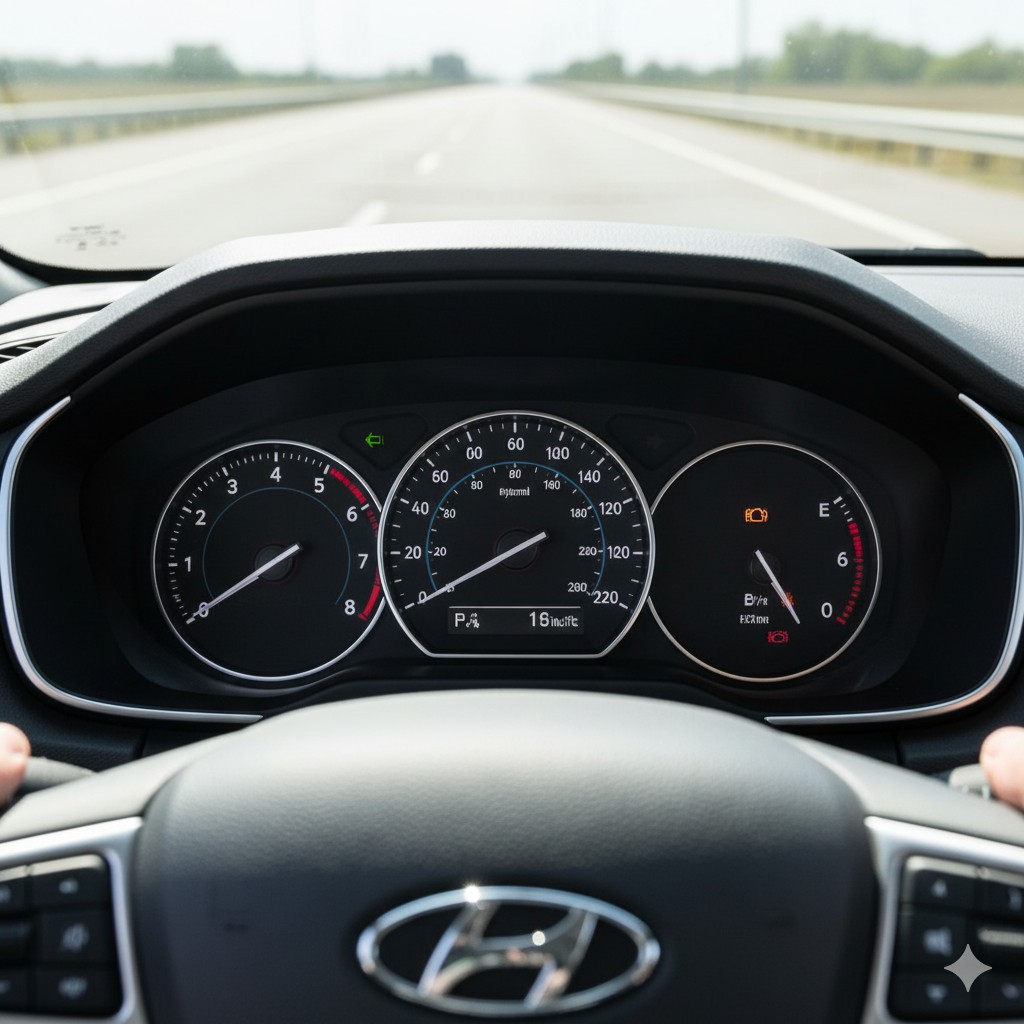
What happens if you don't replace a faulty thermostat?
Engine overheating
The most serious consequence. It can lead to damage to the head gasket (repair cost PLN 2000-5000), deformation of the head (replacement PLN 3000-8000) or complete seizure of the engine (replacement/replacement PLN 10000-30000).
Increased fuel consumption
An underheated engine uses significantly more fuel - up to 1-2 litres more per 100 km. On an annual basis, this amounts to hundreds of zlotys in losses.
Accelerated engine wear
Driving at the wrong temperature results in faster ageing of the oil, wear and tear of moving parts, and deposition of deposits.
Problems with exhaust emissions
The car may fail the technical test due to excessive emissions (an underheated engine emits more harmful substances).
Lack of comfort
In winter, when the thermostat is locked in the open position, the heater does not work - the cabin remains icy.
Thermostat in a rental car - what should you know?
If you rent car at Slawa Rent, you can rest assured - all our vehicles are regularly serviced and the cooling system is regularly inspected. However, it is worth knowing the basics:
What to do if you notice a problem?
The temperature gauge enters the red field?
- Immediately stop the vehicle in a safe place
- Turn off the engine
- Do not open the radiator cap - hot liquid can burn!
- Call the 24/7 support number Slawa Rent
- Follow the instructions
Is the engine taking a long time to warm up or is the heater not heating?
- This is less urgent, but also report to the rental company
- Do not try to diagnose or repair it yourself
- We will provide a replacement vehicle or a rapid repair
Your responsibility
If the problem is due to your negligence (e.g. you ignored the warnings and continued driving with an overheated engine), you may be liable for damages. Therefore always react immediately to alarming signals!
At Slawa Rent, we provide full technical support and a quick response to any mechanical problem so you can enjoy a safe and trouble-free ride.
Summary
The thermostat is a key component of the cooling system that needs to be replaced every 80-120,000 kilometres or when symptoms of malfunction such as overheating, long heat-up or unstable engine temperature occur. Replacement costs range from £300 in popular cars to £2,500 in premium models.
Ignoring thermostat problems can lead to serious and very costly engine damage. Checking the cooling system regularly, replacing the fluid as recommended and reacting promptly to the first symptoms are the key to a long service life for the drive unit.
At Slawa Rent, all vehicles are kept in perfect working order so that you can enjoy a safe and comfortable ride!
Slawa Rent - We take care of every technical detail!