

Parallel reverse parking - a complete step-by-step guide
Parallel parking is one of the most difficult manoeuvres for novice drivers and also a compulsory part of the driving test. Mastering this parking technique is crucial for comfortably navigating the city, where parking spaces often require precise manoeuvring.
Basics of parallel parking
What is parallel parking
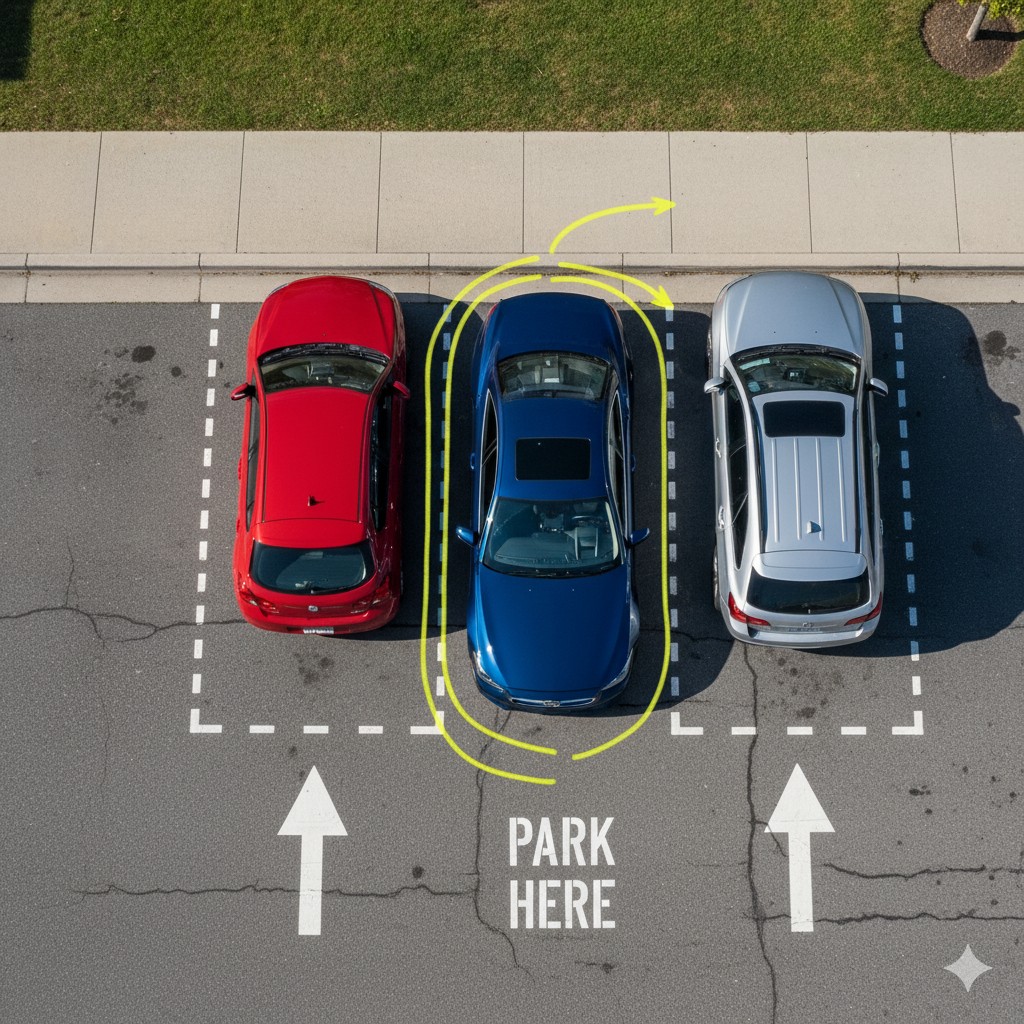
Parallel reverse parking is a parking technique that involves placing the vehicle parallel to the kerb between two already parked cars. The manoeuvre is carried out in reverse gear, allowing for better control of the vehicle and precise entry into the available space.
WORD examination requirements
The Provincial Traffic Centre includes parallel parking as a compulsory part of the driving test. The candidate must demonstrate the ability to perform the manoeuvre safely and accurately without damaging the vehicle or obstacles.
Minimum parking space
A space of approximately 1.5 times the length of the car being parked is required to safely complete the manoeuvre. In the case of car with a length of 4.5 metres, the minimum gap should be approximately 6.5-7 metres.
Step-by-step parking technique
Preparing for a manoeuvre
Before parking, position your car parallel to the vehicle behind which you want to park. Keep a distance of approximately 60-80 cm from the side of the neighbouring car. The side mirrors should be parallel to each other.
Step 1 - Starting position
Stop when the rear wheel of your car is at the height of the rear bumper of the vehicle you are parking next to. This is the key reference point for starting the manoeuvre.
Step 2 - Start of reversal
Put your car in reverse gear and start reversing slowly. The steering wheel should remain in a straight position until the rear of your car starts to enter the parking gap.
Step 3 - Turning the steering wheel
When the rear wheel is in line with the rear bumper of the neighbouring car, turn the steering wheel as far as possible towards the kerb. Continue reversing slowly, keeping an eye on the side mirrors.
Step 4 - Position correction
When the side of your car reaches an angle of about 45 degrees to the kerb, stop and straighten the steering wheel. Then continue reversing until your car is parallel to the pavement.
Step 5 - Finalising the manoeuvre
Once you have positioned your car parallel to the kerb, correct your position so that you maintain equal distances from the front and rear vehicles. Make sure you are not blocking the exit of other drivers.
Modern parking aid
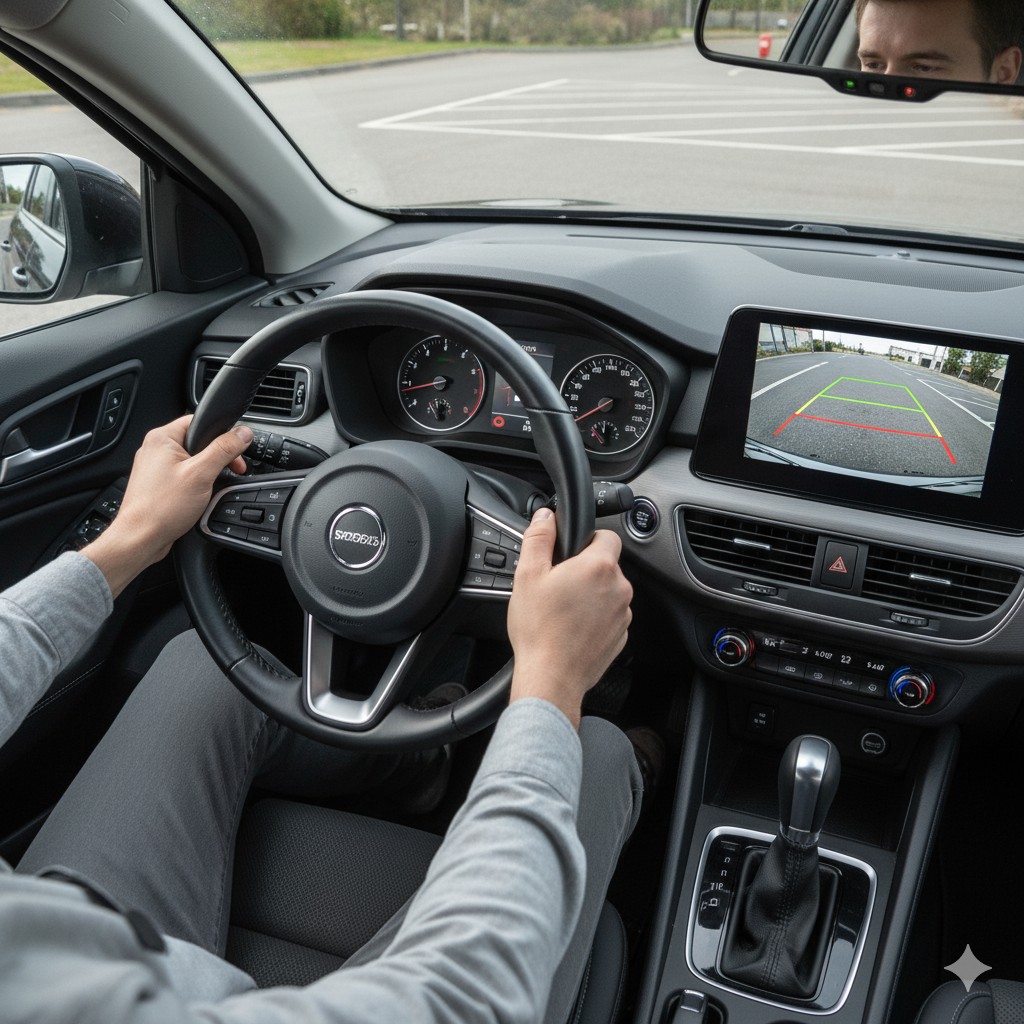
Reversing camera in practice
The reversing camera makes the parallel parking manoeuvre much easier. The screen displays auxiliary lines showing the vehicle's trajectory, allowing you to enter the gap precisely.
Parking sensors
Parking sensors inform the driver of the distance to obstacles by means of acoustic signals. The closer to the obstacle, the more frequent the signals become. This is particularly useful when visibility is limited.
Automatic parking systems
The most modern vehicles offer automatic parking systems that perform the manoeuvre themselves. All the driver has to do is control the speed and the system controls the steering wheel and selects the appropriate turning moments.
The most common mistakes and how to avoid them
Wrong starting position
The most common mistake is to position the car incorrectly before starting the manoeuvre. Too much or too little distance from the neighbouring vehicle makes it difficult to park correctly.
Manoeuvring too fast
Haste is the enemy of precision in parallel parking. Slow, controlled movements allow you to better assess the situation and make corrections during the manoeuvre.
Incorrect use of mirrors
Some drivers rely solely on the rear-view mirror, forgetting about the side mirrors. All mirrors are equally important for the safe execution of a manoeuvre.
Panic during the exam
Stress during the examination for driving licence can lead to mistakes. Regular practice of the manoeuvre builds confidence and automates the correct movements.
Road safety when parking
Observation of movement
Before starting a manoeuvre, always make sure that you are not blocking the traffic of other vehicles. Switch on your turn signals and keep an eye on your mirrors so that you do not startle other road users.
Control of blind spots
Blind spots in your mirrors can hide pedestrians, cyclists or motorcyclists. Before every manoeuvre, check your surroundings by looking directly over your shoulder.
Attention pedestrians
Be particularly careful in the presence of pedestrians, especially children, who may move unpredictably in the area of the parked car.
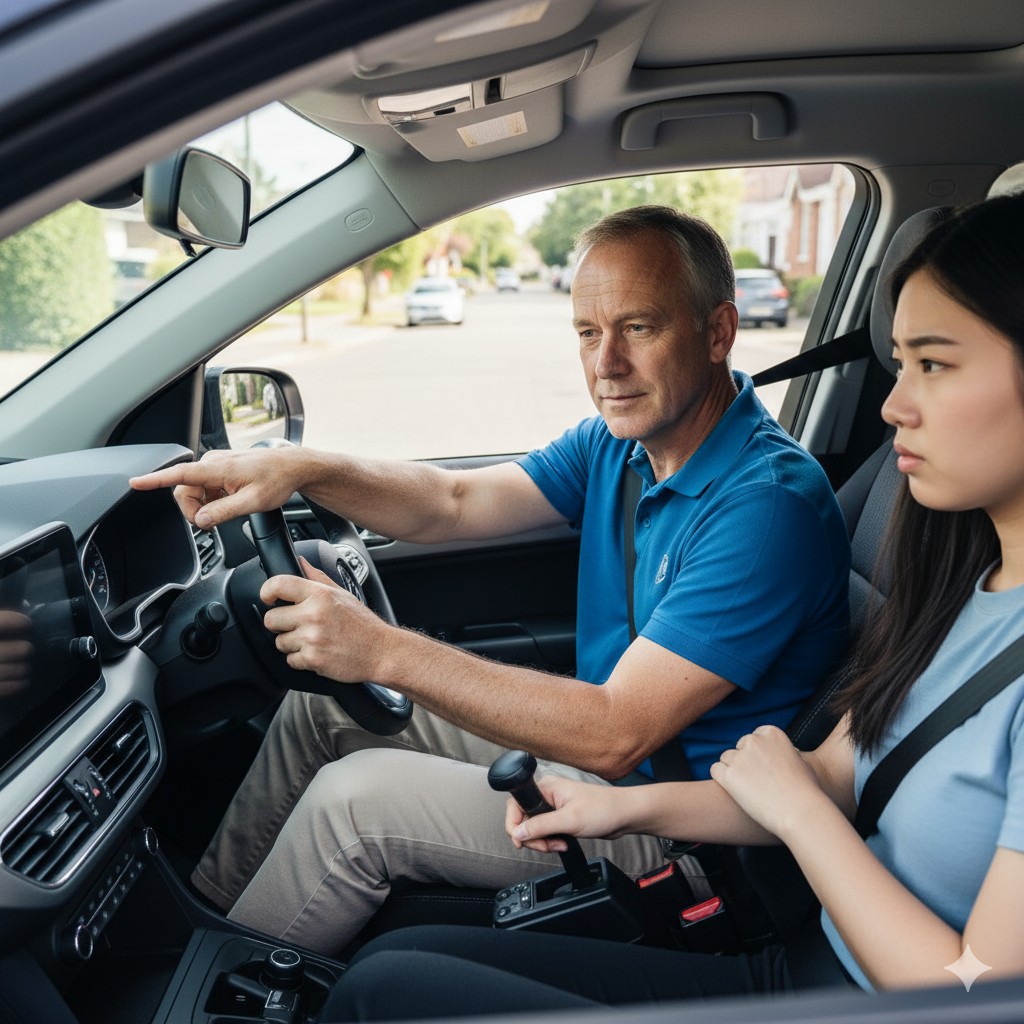
Parking in the rental offer
Slawa Rent - modern equipment
At Slawa Rent in Wadowice, we offer cars equipped with modern parking assistance systems. A reversing camera, parking sensors and automatic parking systems make manoeuvring in difficult urban conditions much easier.
Instructions for customers
We provide a short briefing on how to use them to every customer renting a car with parking assistance systems. We explain the functioning of the reversing camera and sensors and demonstrate their practical use.
Variety of vehicles
Nasza flota obejmuje samochody o różnych gabarytach – od kompaktowych pojazdów miejskich idealnych do nauki parkowania, po większe SUV-y wyposażone w zaawansowane systemy wspomagania manewrowania.
Support during learning
For those learning to park, we offer cars with good visibility and manoeuvrability. The compact dimensions make it easier to master a technique that can later be applied to larger vehicles.
Practical tips for the exam
Regular exercise
The key to success is to practise the manoeuvre regularly in different conditions. Practice in an empty car park with cones and then in real urban conditions.
Knowledge of the vehicle
Get to know the test vehicle well before the test. Check the position of the mirrors, the reach of the steering wheel and the sensitivity of the clutch and brake.
Calmness and concentration
Stay calm during the exam and focus on performing the next steps correctly. Remember that the examiner is not only assessing the end result, but also the safety of the manoeuvre.
Communication with the examiner
Do not hesitate to ask the examiner if you have any doubts about the manoeuvre. It is better to be sure of what to expect than to perform a manoeuvre incorrectly.
Parallel reverse parking is a skill that becomes automatic over time. With regular practice, knowledge of the theory and the use of modern assistance systems, you can master this technique and navigate crowded city streets with confidence.
Slawa Rent – Wypożyczalnia Cars
Wadowice
Practice parking in our modern cars!